|
 Rats!
Here we are at the end of the year again. It's supposed to be fun,
so why do so many of us get depressed when the holidays roll around? Rats!
Here we are at the end of the year again. It's supposed to be fun,
so why do so many of us get depressed when the holidays roll around?
The problem stems from a cultural bias against taking the time to
be still. What do I mean by that? Most of us are running around
on a fast-moving treadmill and we can't get off. This compulsively
busy behavior, this fast-paced mentality, is an unfortunate symptom
of our time. If you are in business, and especially if you are in
business for yourself, the old-fashioned eight-hour day has been
transformed into a ten or twelve-hour day. And for many people,
even if they don't enjoy the work they are doing, they need it because
it provides structure for their lives. For true workaholics, the
holidays are regarded with dread because all they have to look forward
to is feeling aimless, lost, and frightened. Often these people
fill their time with endless tasks just to keep from being alone
with themselves. They're like sharks; they have to keep moving or
they think they'll drown.
When your life is nothing more than a high-speed chase, it's difficult
to tune into what's going on in your emotional life. While you're
rushing around from one appointment to the next, one meeting to
the next, it's easy to miss messages from your body. People who
don't slow down and commune with themselves on a regular basis are
eventually headed for a crash.
The crash often occurs at the holidays. Suddenly you are forced
to slow down and face all of the emotional issues that have been
piling up while you were on the move. To be confronted with these
unresolved issues in this unexpected way is the recipe for depression.
The way to avoid it is to learn how to be still and to spend quality
time with yourself. I have found several valuable techniques over
the years to help me slow down. They are: meditation, yoga, and
"farting around." (Two of these are well-documented, respected traditions
found in the moth-eaten texts of Eastern literature. The third comes
from Ed's Encyclopedia of Living Well.)
The mind is the closest thing there is to a perpetual-motion machine.
It never stops working unless a conscious effort is made to stop
it. The practice of meditation is a conscious effort to stop it,
at least to some degree. It can be looked at as a form of self-hypnosis
that slows the mind down to a manageable speed so that we can be
aware of what is passing through it. Instead of entertaining the
many unconnected thoughts that pass through your mind, focus on
one thing to the exclusion of everything else. It takes practice,
but the benefit is increased clarity. Here is a specific exercise:
Dim the lights. Sit cross-legged on a pillow or in a comfortable
chair and begin to focus on your breath. The breath is always a
good object of concentration because it is steady and reliable.
Take a deep breath and slowly count to five. Hold it one moment
longer, then exhale to a count of five. Hold it a moment longer,
then inhale for a count of five, and so on. Try it for five minutes
a day and notice how relaxed you feel at the end of a week.
This breathing meditation is one of the basic practices of yoga.
Yoga is a methodology for expanding the mind and the body through
breathing and stretching. As we age, our bodies lose the flexibility
we need for optimal functioning. Many people like myself first approach
yoga because of an injury that won't heal or some soreness that
won't go away. For me it was the aches and pains from playing handball.
The surprise bonus, however, is the overall calming and healing
effect it has on the body as a whole. It slows us down and allows
us to focus on our state of mind, right here and right now. One
cannot perform the various stretching poses of yoga without constantly
checking on the messages coming from the body. In this way, yoga
is an excellent way to answer the question, "How am I feeling right
now?"
"Farting around" can have the same result. What I mean by this is
enjoying unstructured time, spending time with no apparent purpose,
just being and observing. Most of our time is so filled with purposeful
activities that we can only let ourselves fart around on vacation.
And even then we keep ourselves surprisingly scheduled: sky diving
at noon, snorkeling at two, buying souvenirs for the family, showering,
dressing for dinner by six.
The flip side of this frantic scheduling is just to slow down. At
work, do one project at a time. Consider getting in early to get
a jump on the day. When you get home at the end of the day, don't
rush to turn on the TV and do five things at once. Instead, slowly
hang up your coat, turn on some music, pour yourself a glass of
wine and go through the mail. When the holidays arrive, don't give
your phone number to your clients. Instead, check in once a day.
Be conscious of putting distance between work and play. Allot time
for both leisure and work, and perhaps cut down on the amount of
work you take home with you on the holidays.
Time is now in such short supply that it appears to be a cardinal
sin if we don't use every single moment for some specific purpose.
Well, I am now certifying "farting around" as a specific purpose.
If you learn to fart around on a regular basis, the holidays will
seem like the fun time they are supposed to be.
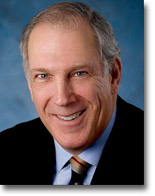
Ed Brodow is a motivational speaker, negotiation expert, and author
of Beating the Success Trap: Negotiating Your Own Path to Success. If you wish to reprint this article in your publication,
please contact Ed for permission at ed@brodow.com.
|


